
Retail Signage Trends : Ideas, Displays and Strategies
-
Posted:
(UTC)
Last Updated:
(UTC)
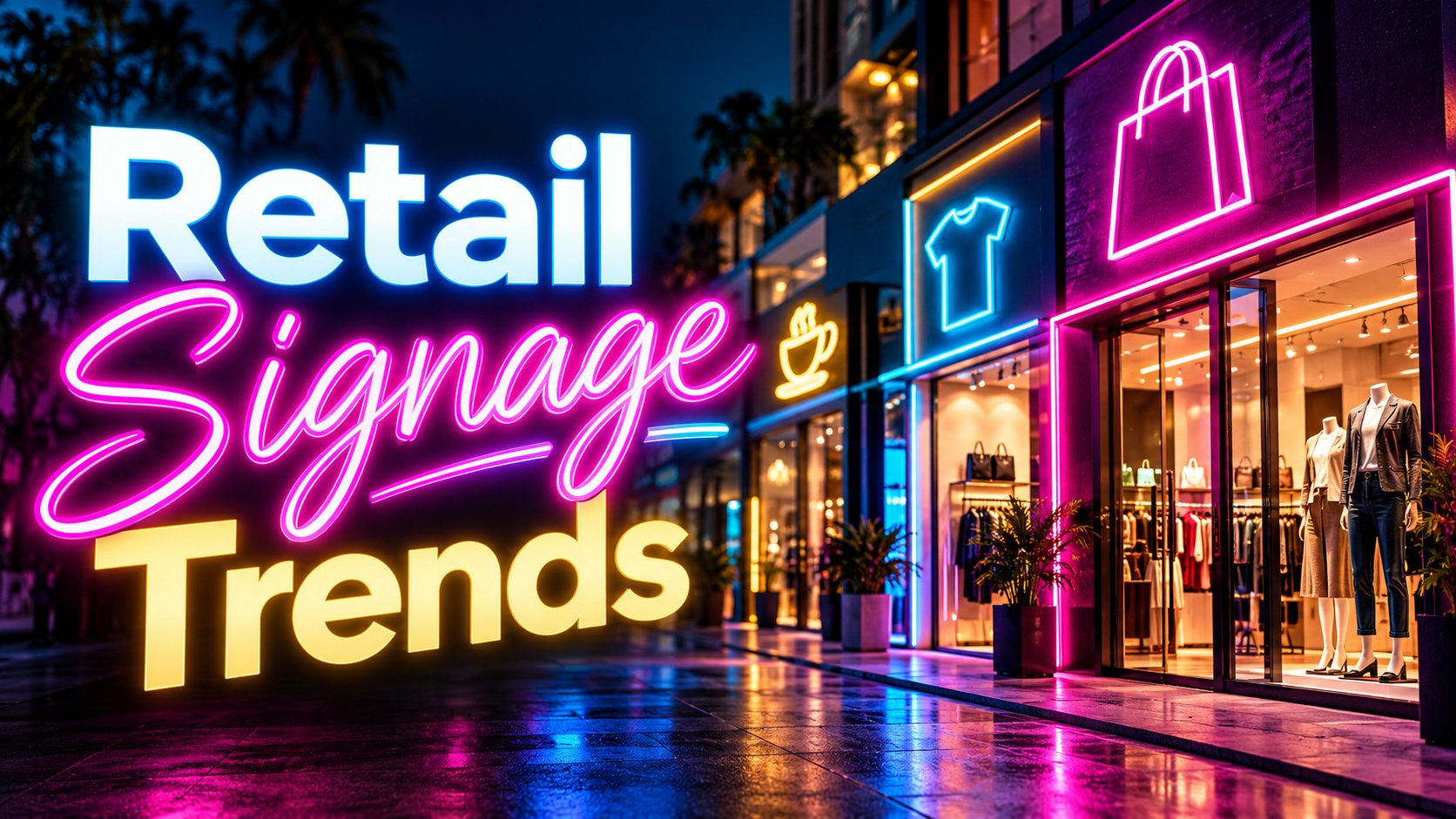
Retail Signage Trends 2026: Window Displays, Digital Screens, Ideas
A shop owner on a busy high street spent weeks perfecting her shelves, yet the foot traffic kept walking past. One evening she installed a glowing sign above a freshly restyled window, and by morning strangers were stopping, pointing, and stepping inside. Nothing about the products had changed; the story outside the glass had. That small moment is what retail signage trends are really about: the signs, lights, and screens that decide whether a shopper pauses or keeps moving. This guide walks through what is shaping stores in 2026, from window displays to digital screens and a signage plan that holds together.
What Are Retail Signage Trends in 2026?
Retail signage trends are the shifts in sign design, lighting, materials, and screen technology that shape how stores attract, guide, and convert shoppers. In 2026 those shifts lean toward experience-led design, consistent branding, sustainability, flexible fixtures, and a tighter link between physical and digital touchpoints. People who type queries such as retail trends pvt ltd are often hunting for a company name, yet the real value sits in understanding the trends themselves and applying them to a specific shop.
Why Trend Signage Matters More Than Ever
Trend signage is not decoration. It is the first sales conversation a store has with someone walking past.
Customers decide before they enter. A strong storefront sign that attracts customers turns that split-second decision in your favour. Shoppers now expect clear navigation, a memorable atmosphere, and messaging that feels current, so posters that never change are losing ground to formats that adapt.
Top Digital Signage Trends Reshaping Stores
The top digital signage trends of 2026 share one idea: content should respond to the shopper instead of broadcasting at them.
| Trend | What it looks like in store | Best suited for |
| AI-personalised content | Screens that adjust offers by time, weather, or footfall | Chains and large formats |
|
High-bright window screens |
2,500–3,000 nit panels readable through daylight glare | Street-facing shops |
| Mini-LED and video walls | Sharper, brighter walls at falling prices | Flagships and showrooms |
| Electronic shelf labels | E-paper tags that update prices instantly | Grocery and specialty |
| Interactive and QR signs | Touchscreens and scannable codes linked to product pages | Fashion and electronics |
| Short vertical video | Social-style clips lasting a few seconds | Malls, beauty, apparel |
Screens Versus Illuminated Signs
Screens are not always the answer. Many retailers weigh an LED sign against a neon sign before committing to a full screen network. Illuminated formats such as LED neon, lightboxes, and 3D lettering are climbing too, because they stay readable in any light and cost far less to run than a video wall.
Sustainability and Flexibility
Recycled materials, energy-efficient LEDs, and modular frames now count as baseline expectations. Fabric graphics also beat rigid boards because they are light and easy to swap.
Retail Signage Market: What the Numbers Say
The retail signage market is growing, and screens drive most of the measured spending. Analyst estimates differ because each firm draws the boundary of "retail" and "digital signage" differently.
| Source | Scope | Reported figure |
| Mordor Intelligence | Retail digital signage, 2026 | About USD 6.24 billion, reaching USD 8.29 billion by 2031 (5.86% CAGR) |
| Technavio | Retail digital signage, 2025–2030 | Growth of USD 2.39 billion at a 6.5% CAGR |
| Meticulous Research | All digital signage, 2026 | USD 23.5 billion, with retail the largest vertical |
Every report agrees on the direction: retail leads adoption, and North America holds a large share, around 37% according to Mordor. Budget questions surface early in planning. Understanding storefront sign pricing for 2026 keeps the plan realistic before any screens are priced.
Window Display Design: Where Signage Starts
Glass is your cheapest billboard space. Pairing a lit sign with grand opening decoration ideas gives a new window instant pull, and the same logic works for any launch or sale.
What Is Window Display in Visual Merchandising?
A window display in visual merchandising is the styled arrangement of products, props, lighting, and signage in a store's front window, built to stop passersby and tell a brand story in seconds. A university study of apparel shoppers found that promotional windows were the style most likely to trigger a purchase, which is why the best window display design pairs a clear offer with a sign that reads from the pavement.
Types of Window Display
| Type | How it works | Best for |
| Open-back | No barrier between the window and the shop floor | Showing the interior and staff |
| Closed-back | A wall or backdrop separates window and store | Tightly staged scenes |
| Corner | Two windows meet to form a box visible from two streets | Corner units and flagships |
| Island | Free-standing display seen from all sides | Large department stores |
| Elevated | Raised platform that lifts products to eye level | Shoes, bags, accessories |
| Shadowbox | Small framed niche with a single scene | Jewellery and beauty |
Corner Window Display Tactics
A corner window display has two glass faces, so signage must read from both angles. Layer heights, keep one hero product, and angle lighting to avoid glare.
Showroom Window Display Approach
A showroom window display sells large items such as furniture, appliances, or vehicles, so the window works like a gallery. Show one hero piece, add a clear spec-and-price sign, and put the brand mark in light.
Shop Display Ideas That Work With Signage
Boutiques can safely borrow big-brand tricks. A boutique hanger neon sign above a clothing rail shows how one glowing piece can anchor a small shop. These shop display ideas pair well with signs:
- Vertical risers: use height instead of width in tight windows.
- Acrylic pedestals and clear boxes: keep products clean and let signage stand out.
- Natural materials: wood and matte metal for a calm, premium feel.
Retail Signage Ideas and Examples
Retail Signage Examples by Store Type
| Store type | Sign | Why it works |
| Fashion boutique | Neon hanger above the rail | Marks the category from across the floor |
| Café or restaurant | Warm neon wall mark | Sets the mood and invites photos |
| Grocery | Large bold lettering plus shelf labels | Stays readable across wide floors |
| Showroom | Backlit lightbox with a scannable spec | Joins presentation and detail |
Restaurants and cafes follow similar rules. Warm restaurant lighting ideas that boost sales show how light shapes appetite and dwell time. Shops can also pick ready-made business neon signs such as open signs and trade designs.
Retail Signage Ideas for Small Shops
Keep wording short and icon-led, use high-contrast colours, add ceiling and floor signs for guidance, and run a glowing open sign day and night.
Retail Signage Pinterest: Turning Boards Into a Brief
Retail signage Pinterest boards are excellent for mood, but pins show photos, not performance. Group pins by purpose (entrance, windows, wayfinding, lighting), note the shared colour or lettering style, then turn the board into a brief with size, mounting, and power needs.
Building a Retail Signage Strategy
Signs work harder when they match brand identity. Using a custom LED neon sign for brand awareness keeps colour and tone consistent across locations. A solid retail signage strategy follows five steps:
- Map the journey: street, entrance, aisles, till.
- Give each sign one job: attract, guide, persuade, or confirm.
- Choose formats: illuminated, printed, or digital, by role and location.
- Plan placement and power: sightlines, mounting, and electrical access.
- Measure results: compare footfall, dwell time, and sales before and after.
Wayfinding deserves its own line. Shoppers who cannot find what they want simply leave, so directional signs belong in the plan from day one.
Retail Signage Trends FAQs
How often should retail signage be updated?
Seasonal window displays work best when changed every three to four weeks. Permanent exterior and wayfinding signs usually need a review once a year for wear, lighting, and brand changes.
How big should sign lettering be for shoppers to read it?
A common rule of thumb is about one inch of letter height for every ten feet of viewing distance. Contrast and spacing matter as much as size, so keep fonts simple and colours bold.
Do retail shop signs need a permit?
Often yes, especially for exterior signs. Rules on size, lighting, and placement differ by city and landlord, so confirm requirements with your local authority or property manager before ordering.
How much does retail signage cost?
Costs span a wide range. Custom LED neon signs typically fall between about $150 and $500 depending on size and complexity, while window video walls can run from $15,000 to $30,000 or more.
How long do LED neon signs last in a store?
With normal use, a well-made LED neon sign can last ten years or more. Cool-running LED flex also makes long daily operating hours practical for shops.
Can a small boutique use signage effectively?
Yes. One well-lit sign, a clear window message, and a single scannable code often outperform a crowded set of screens, and each piece can be added in stages.
Conclusion
Retail signage trends in 2026 reward stores that treat every sign as one connected journey, from the window that stops a passerby to the aisle sign that keeps them shopping. Start with a strong window, clear wayfinding, and one signature illuminated piece, then build outward. If you want a sign made for your shop, get a free mockup and quote from VitalNeon, or design your own neon sign in minutes. Every order ships free worldwide with a 2-year warranty.