
Neon Signs Psychology: What Each Neon Color Makes You Feel
-
Posted:
(UTC)
Last Updated:
(UTC)
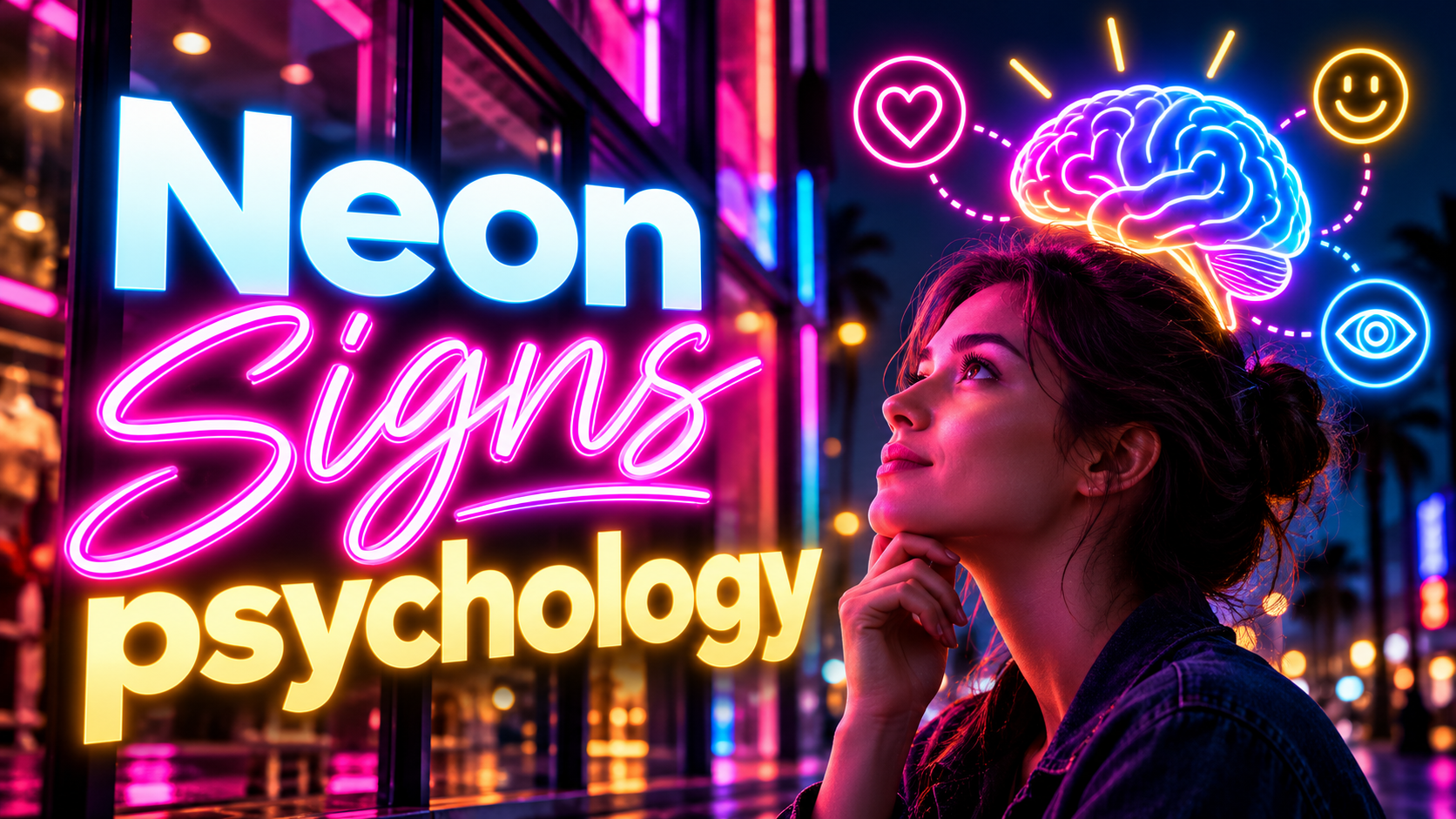
Neon Signs Psychology: How Neon Lights Shape Mood and Buying Habits
Daniel ran a small bakery that looked busy at noon and empty by evening. He hung a plain white sign over the counter and nothing changed. Then he swapped it for a warm orange glow, and people began stopping at the window, smiling, and walking in. The bread was the same, but the feeling of the room was not. That shift is the heart of neon signs psychology: light and color speak to people before a single word is read.
What Is Neon Signs Psychology and What Do Neon Signs Mean?
Neon signs send two messages at once: the words you read and the mood you feel. This section covers the definition, the plain-language meaning, and the science behind the glow.
Neon Signs Psychology Meaning
The neon signs psychology meaning is simple: it describes how color, brightness, and style of a glowing sign influence emotion, attention, and memory. A pink sign feels playful, a blue one feels calm, and an orange one feels welcoming, even before anyone reads the text.
What Neon Signs Mean in English and Urdu
Neon signs mean illuminated signs made from glowing tubes. The neon signs meaning in English is "a lit sign using gas-filled tubes or LED flex". The neon signs meaning in Urdu follows the same idea, a glowing signboard, and the English term neon sign is widely used as it is. For a neon signs synonym, use illuminated signs, glow signs, light signs, or tube signs. Neon meaning also goes beyond the gas itself: it now stands for any bright, expressive glow that makes a place feel alive.
Neon Signs in Chemistry
In chemistry, neon is a noble gas with the symbol Ne and atomic number 10. When electricity passes through a tube filled with it, neon gives off a reddish-orange light. Other colors come from different gases or from colored coatings inside the glass, which is why blue often comes from argon with mercury vapour.
Why Neon Lights Grab Attention
Our eyes are drawn to brightness, contrast, and movement. Neon lights combine all three, and they add a warm, handmade quality that screens rarely match. That is why a single glowing line can outshine a whole wall of printed signs.
Brightness and Contrast
A glowing line against a dark wall is the highest contrast most spaces can offer. The eye lands on it first, which is why even a small sign becomes the focal point of a room.
Emotional Memory
Light and color are stored together in memory. People often recall the glow of a place more clearly than its menu or its layout, which is why a distinctive sign keeps working long after the visit ends.
Nostalgia and Familiarity
Many people link neon with diners, cinemas, and late nights out. That memory carries trust and fun into the present, so a modern sign can feel familiar the first time it is seen.
Neon Color Psychology: What Each Color Signals
Color does most of the emotional work in neon. These are common associations, and they shift with culture and context.
Neon Blue
Neon blue feels calm, clean, and dependable. It suits clinics, tech brands, studios, and any space where focus matters. Very bright blue can feel cold, so soften it with warm surroundings.
Neon Green
Neon green suggests energy, freshness, and playfulness. It is popular for gaming rooms, bars, and youth brands. In a calm setting, it can feel loud, so use it as an accent.
Neon Orange
Neon orange reads as friendly, social, and warm. It encourages conversation, which is why cafés and casual restaurants use it often. It also stands out well against dark brick and wood.
Pink, Red, Yellow, Purple, and White
- Pink: playful, romantic, and photogenic.
- Red: urgent, bold, and appetite-linked.
- Yellow: optimistic and attention-grabbing.
- Purple: creative and slightly luxurious.
- White: clean, modern, and versatile.
Custom Neon Signs Psychology: Matching Color to Your Goal
Custom neon signs psychology starts with one question: what should visitors feel in the first three seconds? Choose the feeling first, then the color.
Color pairing decides whether designs succeed. These popular neon color combinations show how two hues can strengthen each other instead of competing.
Restaurants and Cafés
Food businesses rely on mood lighting. Warm orange, amber, and soft red encourage lingering and appetite, and these restaurant lighting ideas show how a glow can stretch dinner into dessert.
Retail Stores and Salons
Pink, white, and gold feel stylish and inviting, and they photograph well, which gives customers a reason to share your space online. In wellness spaces, soft blue and warm white suggest calm and care. Pick business neon signs in these tones when you want shoppers to feel welcome and relaxed.
Brands That Want Recall
Color becomes brand memory through repetition. A custom neon LED sign for brand awareness in your signature shade turns a wall into a landmark.
Common Color Mistakes to Avoid
- Too many colors at once: the message gets lost and the sign feels noisy.
- Low contrast with the wall: a dark red on a dark wall fades away.
- Ignoring the room's own light: warm bulbs can turn a blue sign slightly green.
- Copying a trend blindly: a color that works for a gaming room may feel wrong for a clinic.
Neon Signs for Baby: A Gentler Approach
Nursery lighting should feel soft, safe, and quiet. Think low brightness and calming tones rather than bold statements. Safety questions come up very often, and reading whether neon signs are dangerous gives parents clear reassurance about LED options.
- Choose warm white, pale pink, soft blue, or gentle amber.
- Pick LED neon that stays cool to the touch.
- Mount the sign well out of reach and keep the cable tucked away.
- Use short, simple wording, such as a name or a moon shape.
Soft light suits sleepy little rooms. Pick a sign with adjustable neon dimming so the glow can fade at bedtime. Nursery decor deserves extra gentle choices, so browse kids room neon lights in muted shades.
Glass Neon vs LED Neon: Does the Psychology Change?
The feelings come mostly from color and brightness, so the message stays the same across materials. The difference is in the details: glass gives a deeper, classic hum of color, while LED gives cleaner edges and more shades.
Material choice changes the glow slightly. A look at neon sign vs LED sign helps you pick the version that fits your space and budget. If you want to switch moods through the day, RGB neon signs change color at a button press.
How to Apply Neon Signs Psychology in Your Own Space
Good color theory only works when it is applied with a plan. Follow these steps in order.
- Name the feeling: calm, bold, cosy, or energetic.
- Pick one main color: let it carry the mood.
- Add a supporting shade: keep it softer than the main color.
- Test it in context: view a mockup against your real wall and at the time of day you open.
- Test readability: letters must stay clear from the farthest seat.
Browsing a neon signs pic gallery before you decide is useful, but remember that photos exaggerate brightness. A mockup on your own wall tells you more.
Neon Signs Psychology FAQs
These answers cover the questions people ask most about color and mood. Each one is short, so you can find your fix quickly.
Can a neon sign affect sleep?
Very bright blue or white light in the evening can keep some people more alert. For bedrooms, warm shades at low brightness are the gentler choice.
Is color psychology scientifically proven?
Research shows color can influence mood and attention, but results vary by person and culture. Treat each color as a helpful guide rather than a guarantee.
Do colors mean the same thing everywhere?
No. Red can mean luck in one culture and danger in another. Match your palette to the audience you want to reach.
How many colors should one sign use?
Two or three is usually plenty. More than that can look busy and weaken the message.
Which neon color is easiest to see from far away?
Warm white, yellow, and bright orange usually carry the longest distance at night. Dark backgrounds make any color easier to read.
Do neon colors fade over time?
Quality LED neon holds its color for years with normal use. Direct sun and heat can dull any lit sign sooner, so place it with some shade.
Conclusion
Neon signs psychology is the quiet reason a sign can fill a room or empty one. Pick the feeling first, match the color to it, and let the glow do the talking. If you want a sign that speaks the right way, get a free mockup and quote from VitalNeon, or design your own neon sign and preview the color before it is made.