
Neon Sign vs LED Sign | Which One Should You Choose?
-
Posted:
(UTC)
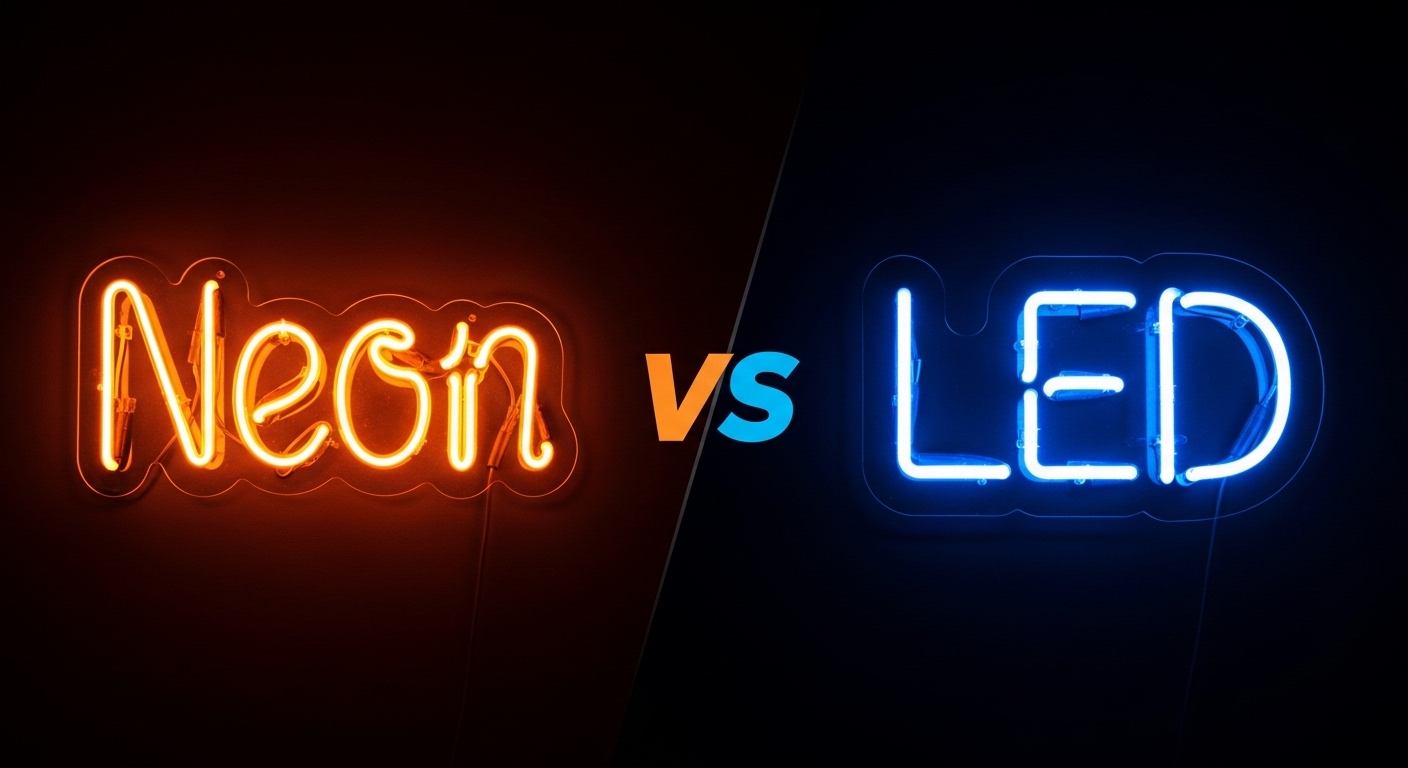
Neon Sign vs LED Sign | Explain the Differences
The debate between neon sign vs LED sign has never been more relevant. As LED technology has matured, the gap between traditional glass neon and modern LED neon has narrowed significantly but they are still very different products with distinct advantages and drawbacks. This complete comparison breaks down every major factor so you can make the smartest buying decision for your space, budget, and goals.
What Is a Traditional Neon Sign?
A traditional neon sign is made from glass tubes filled with neon gas (or other noble gases like argon) that glow when electrified via a high-voltage transformer. Each tube is hand-bent by skilled craftspeople into the desired shape, which gives traditional neon signs their iconic, warm, slightly irregular aesthetic that no digital screen can replicate.
Traditional glass neon signs have been used commercially since the early 1900s, and their vintage appeal is a major reason why many buyers still prefer them in the neon sign vs LED sign debate. However, they come with significant drawbacks in terms of fragility, power consumption, and maintenance requirements.
What Is an LED Neon Sign?
An LED neon sign uses flexible LED strip lights encased in a silicone or PVC tube to mimic the appearance of traditional glass neon. The LED flex tubing is mounted on an acrylic or metal backing and powered by a low-voltage LED driver. The result is a sign that visually resembles traditional neon but is lighter, more durable, more energy-efficient, and significantly safer.
LED neon signs have exploded in popularity over the past decade, particularly for home decor, events, and small businesses. In the traditional neon vs LED neon comparison, LED signs win on practicality but traditionalists argue they lack the soul of real neon.
Neon Sign vs LED Sign: Side-by-Side Comparison
| FEATURES | TRADITIONAL NEON SIGNS | LED NEON SIGNS |
| Light Quality | Warm, authentic glow | Bright, Uniform Light |
| Energy Use | High | Low |
| Lifespan | 8-15 years | 50,000+ hours |
| Fragility | Very fragile (glass) | Durable |
| Cost | Higher upfront Cost | More Affordable |
| Customization | Limited by glass bending | Highly Flexible |
| Maintenance | Requires Professionals | Easy DIY repairs |
| Outdoor Use | Possible with care | Excellent Choice |
| Color Option | Limited Range | Full RGB spectrum |
Light Quality | Neon Sign vs LED Sign
This is where traditional neon signs shine literally. The light produced by gas-filled glass tubes has a warm, slightly diffused, omnidirectional glow that photographers and designers have prized for decades. The light wraps around objects, creates a subtle halo effect, and has an organic imperfection that modern consumers increasingly associate with authenticity and craftsmanship.
LED neon signs produce a cleaner, more uniform light. Modern LED flex has improved dramatically in quality, and many buyers cannot tell the difference in photos. However, in person, especially in dimly lit environments, traditional neon has a depth and warmth that LED neon signs have not yet fully replicated. Winner in light quality: Traditional neon sign (for ambiance), LED neon sign (for brightness and consistency).
Energy Efficiency | Neon Sign vs LED Sign
In the neon sign vs LED sign energy debate, LED wins decisively. A typical glass neon sign consumes 3 to 5 times more electricity than a comparable LED neon sign. For a small home sign, the difference is negligible. For a large commercial sign running 12 hours a day, the energy savings from switching to LED neon can amount to hundreds of dollars per year.
Traditional glass neon signs typically draw 3 to 5 watts per foot of tubing. LED neon signs draw approximately 1 to 1.5 watts per foot. This difference becomes significant at large scales and high operating hours.
Lifespan and Durability | Neon Sign vs LED Sign
Traditional glass neon signs can last 8 to 15 years before needing major maintenance, such as regassing or electrode replacement. However, the glass tubing is extremely fragile. A single impact can shatter a tube and render a section of the sign completely dark. Transportation and installation of glass neon signs require significant care.
LED neon signs are dramatically more durable. The flexible silicone casing can withstand bumps, drops, and even bending without breaking. LED lifespans of 50,000 hours or more are standard, which translates to over 17 years at 8 hours of daily use. LED neon signs also degrade much more gracefully than glass neon; rather than suddenly going dark, they gradually dim over thousands of hours.
Winner in durability: LED neon sign, by a wide margin.
Cost Comparison | Neon Sign vs LED Sign
Traditional glass neon signs cost significantly more than LED neon signs. A custom glass neon sign from a skilled craftsperson typically starts at $250 to $500 for a simple word or phrase and can exceed $2,000 to $5,000 for complex or large designs. The premium reflects the skilled handcraft, specialized materials, and higher-voltage electrical components involved.
LED neon signs are considerably more affordable. A comparable custom LED neon sign often costs $80 to $300 for home use, and commercial-grade LED neon signs for storefronts typically run $200 to $800. Mass-produced LED neon signs with popular phrases can be found for as little as $30 to $80 on retail platforms.
Customization Options
In the traditional neon vs LED neon comparison for customization, both types offer extensive options but in different ways. Traditional glass neon can be bent into virtually any shape, but there is a minimum radius to the curves, which limits very tight lettering at small sizes. Color options are determined by the gas type and glass tube color, which limits the available palette.
LED neon signs offer greater flexibility at small scales because the flex tubing can bend more tightly than glass. RGB LED neon signs can produce virtually any color, including color-changing effects and dynamic animations, something traditional neon cannot do without complex and expensive multi-tube setups.
Safety: Neon Sign vs LED Sign
Traditional glass neon signs operate at high voltages — typically between 2,000 and 15,000 volts, which presents genuine safety risks if the sign is damaged or improperly installed. The glass tubing is also fragile, and some older signs used mercury vapor (in argon-filled tubes), which creates a disposal hazard. LED neon signs operate at low voltage (12V or 24V DC), making them dramatically safer around children and pets. There is no glass to break, no high-voltage wiring, and no hazardous gases. LED neon signs are the clear winner for households with young children or pets, and for applications where the sign might be touched or bumped.
Who Should Choose a Traditional Neon Sign?
Despite LED's advantages, traditional glass neon signs remain the right choice for specific buyers and use cases:
- Bar, restaurant, or retail owners who want an authentic vintage aesthetic that no LED can fully replicate.
- Collectors and enthusiasts who value the artisanal craftsmanship of hand-bent glass.
- Photographers and content creators who need the warm, organic light quality of real neon in their shots.
- Businesses where the sign is a central brand element and long-term maintenance costs are acceptable.
Who Should Choose an LED Neon Sign?
LED neon signs are the right choice for the majority of modern buyers. Choose LED if you need:
- A home decoration sign for a bedroom, living room, office, or gaming setup.
- An event backdrop or temporary installation where portability matters.
- A budget-friendly custom sign without sacrificing too much visual appeal.
- A color-changing or animated sign that traditional neon cannot produce.
- A sign for a space where safety around children or pets is a priority.
- Outdoor signage where moisture resistance and durability are essential.
The Verdict: Neon Sign vs LED Sign
In the neon sign vs LED sign debate, there is no universal winner, but there is a practical one for most people. If you are buying a sign for home use, events, or a budget-conscious business setup, an LED neon sign delivers the best combination of cost, durability, safety, and visual impact. If you are a purist who values authentic craftsmanship and that unmistakable warm neon glow, traditional glass neon is worth the premium.
The good news is that both types have never been better. Whether you choose traditional neon or LED neon, you are investing in a powerful piece of visual communication that can transform any space. Use this traditional neon vs LED neon comparison to make the choice that fits your unique situation and enjoy the glow.