
How to Attract Customers to Your Store | 7 Sign Tips
-
Posted:
(UTC)
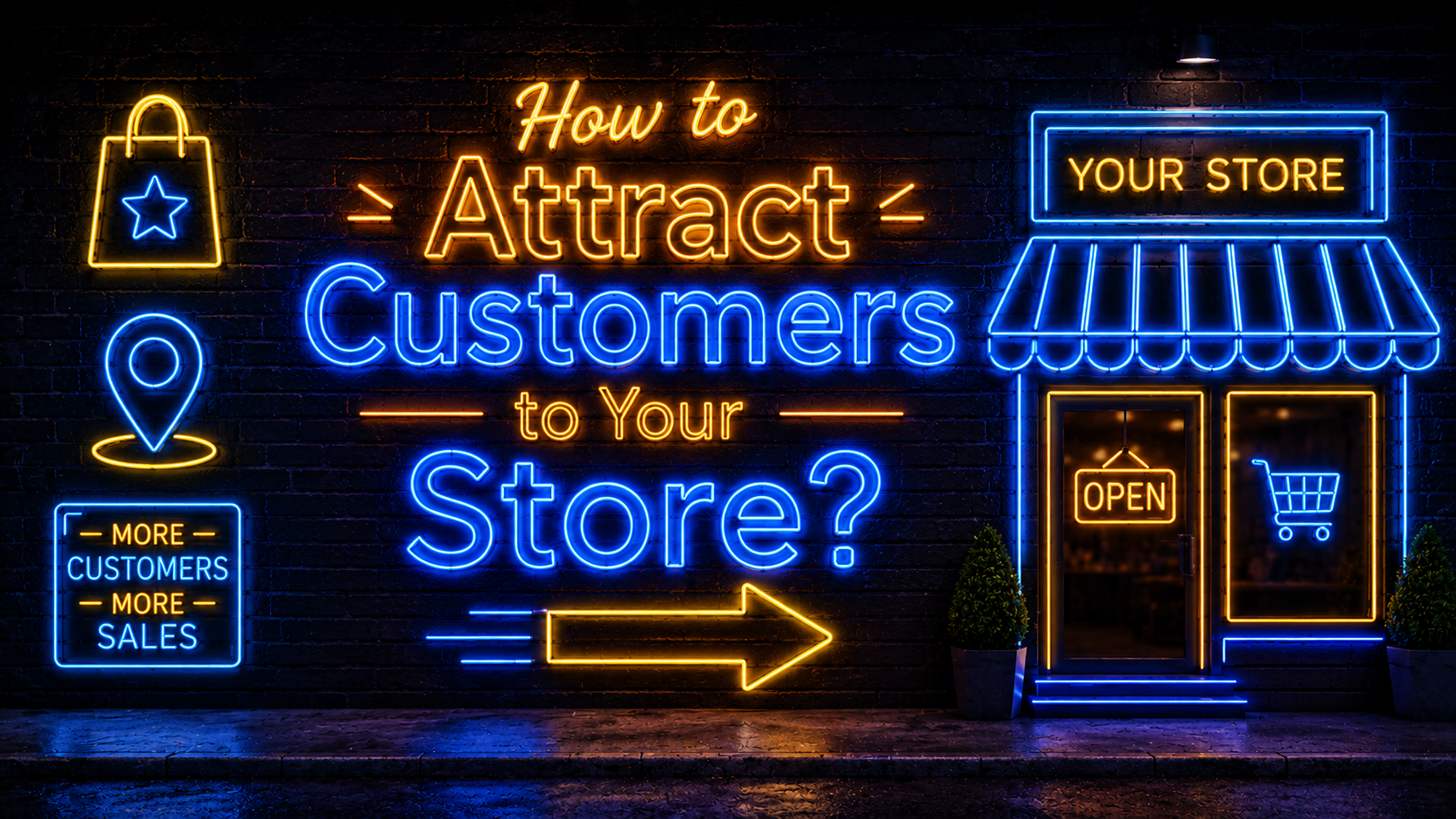
How to Attract Customers to Your Store (7 Proven Signage Strategies)
Most retail owners focus their marketing budget on ads, social media, and promotions and overlook the one thing every single passerby actually sees before they ever visit your website: your storefront. According to research cited by FedEx, roughly 76% of consumers say they've entered a store based solely on its signage, and industry data from the Sign Research Foundation shows businesses that invest in signage see sales increase by around 10% on average. In other words, your sign isn't decoration. It's your most cost-effective salesperson, working 24 hours a day whether you're open or not.
Here's how to actually put that to work.
1. Make Your Sign Readable Before It's Impressive
The single most common mistake in retail signage is prioritizing style over legibility. If someone can't read your sign from the street, sidewalk, or their car in a few seconds, it doesn't matter how creative it is. Stick to clear fonts and strong contrast between text and background, and avoid cramming too much information into one sign: name, what you sell, and one compelling detail is usually enough.
2. Use Color With Intention, Not Just for Attention
Color psychology plays a bigger role in signage than most business owners realize. Warm tones like red, orange, and yellow grab attention and work well for sales or clearance messaging. Cooler tones like blue and green suggest trust and calm, which suits wellness or eco-conscious brands. Black reads as premium and is a strong choice for luxury goods, while white signals cleanliness and simplicity.
A custom-colored LED neon business sign lets you dial in the exact tone that matches your brand instead of settling for whatever a pre-made sign offers.
3. Put Your Sign Where People Are Actually Looking
Signage placement isn't one-size-fits-all. Directional signs work best above eye level, where they're visible from a distance across a store or parking lot. Promotional signage, on the other hand, performs best at eye level in a window display or at ground level on the sidewalk, where it catches someone mid-walk. Before finalizing placement, walk or drive past your own storefront at different times of day to see what a real customer would actually notice first.
4. Let Your Sign Work After Dark
A storefront that goes dark at night is a storefront that stops advertising for half the day. Illuminated signage, whether a backlit lightbox or a glowing LED neon sign, keeps your brand visible in the evening, in bad weather, and during winter's shorter daylight hours. This is one of the simplest upgrades a small business can make, since color-changing RGB neon signs can be dimmed, animated, or switched to match a season or promotion without buying a new sign each time.
5. Use Signage to Guide, Not Just to Announce
Once someone is inside, signage still has a job to do. Directional and informational signs like "Checkout," "New Arrivals," and "Sale" help customers move through your store with less friction, which keeps them browsing longer instead of leaving in confusion. A store that's easy to navigate tends to convert more browsers into buyers simply because customers found what they came for (and often something they didn't expect to buy, too).
6. Refresh Signage Regularly
A sign that's been in the same window for two years starts to blend into the background, even for regular customers. Rotating in seasonal messaging, new promotions, or an updated design keeps your storefront feeling current and gives returning customers a reason to look twice.
7. Check Local Sign Regulations Before You Invest
Many cities and municipalities have restrictions on sign size, height, placement, and even lighting. It's worth a quick call to your local planning office before committing to a large exterior sign, so your investment doesn't run into a permitting issue after the fact.
Bringing It All Together
The businesses that consistently pull foot traffic aren't necessarily spending the most on signage they're being deliberate about color, placement, and lighting, and they treat their sign as an ongoing part of their marketing rather than a one-time purchase. If you're ready to design something built around your brand rather than picking from stock templates, you can get a free custom sign mockup and quote and see exactly how it would look on your storefront before you order.
Frequently Asked Questions
1. Does signage really affect how many customers walk into a store?
Yes. Industry surveys have found the majority of first-time customers noticed a business specifically because of its sign, and a large share of shoppers say they've entered a store based on signage alone.
2. What's the most effective color for a "Sale" or promotional sign?
Red and orange are the most commonly used because they're proven to grab attention quickly and create a sense of urgency, which is exactly what a promotional sign needs to do.
3. Should I use LED neon or a traditional printed sign to attract customers?
LED neon signs stand out more after dark and during low-light hours, cost less to run long-term, and can be customized to your exact brand colors, making them a strong option for storefronts that want to be visible day and night.
4. How often should I update my store's signage?
There's no fixed rule, but refreshing promotional signage seasonally (and doing a full signage audit at least once a year) keeps your storefront from blending into the background for regular passersby.
5. What size should my storefront sign be?
It depends on your building and local regulations, but a good starting point is sizing your sign so it's easily readable from the average distance customers will view it from a busy sidewalk versus a wide parking lot need very different sign sizes.